
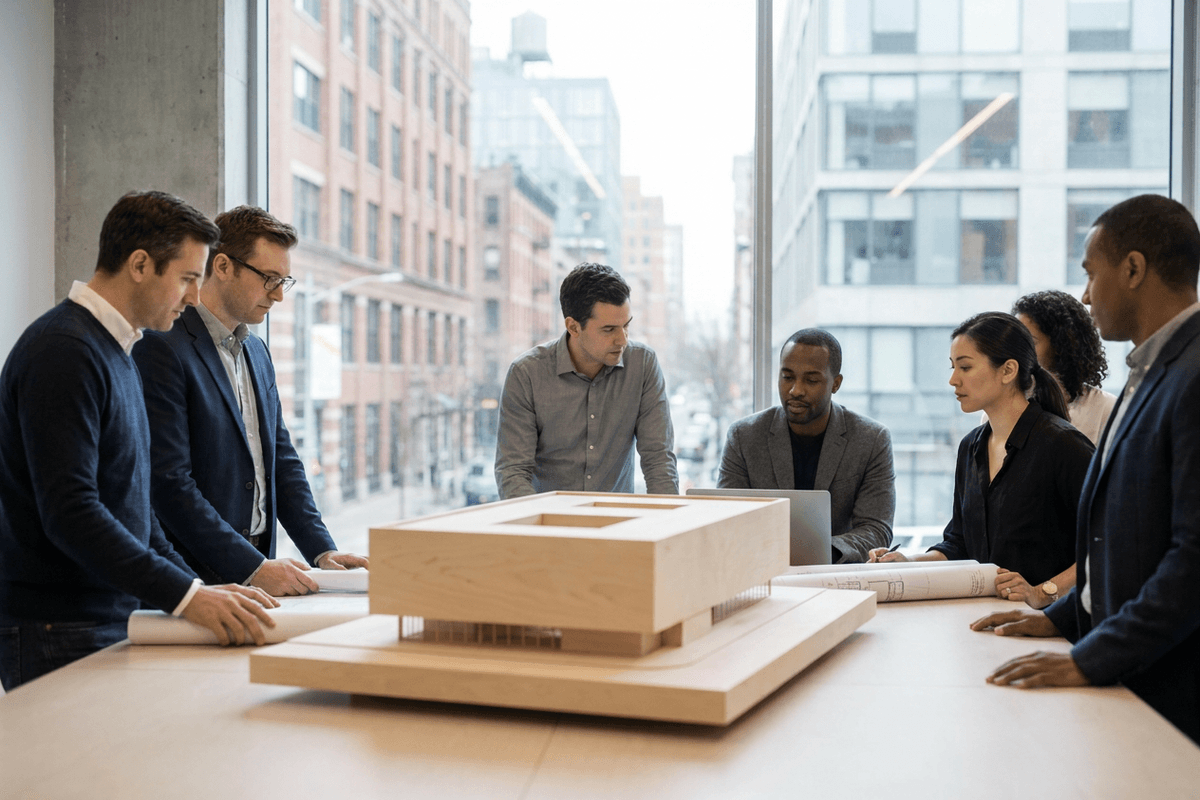

When the macro-economic climate cools, the architecture of culture rarely stands completely still; instead, it turns inward, recalibrating the spaces where public history, civic engagement, and spatial pedagogy intersect. As practice leaders confront persistent economic headwinds across the commercial and speculative sectors, two major museum overhauls announced this autumn highlight how institutional clients are prioritizing precise, high-impact transformations of their existing footprints over sprawling greenfield expansions.
Nowhere is this sharper than in Pittsburgh, where innovative design and research practice AD—WO has been selected to lead the comprehensive renovation of the Heinz Architectural Center at the Carnegie Museum of Art (CMOA). Tasked with reimagining the center’s galleries, collection vaults, and public study spaces, AD—WO—led by Emanuel Admassu and Jen Wood—is poised to reshape one of the nation’s premier repositories dedicated to the built environment. Simultaneously, across the Midwest, Robert A.M. Stern Architects (RAMSA) unveiled designs for a new glazed Welcome Hall at Chicago's Griffin Museum of Science and Industry, unlocking the museum’s historic 1893 North Portico for year-round universal entry. Together, these projects illustrate how strategic adaptive interventions are sustaining design excellence even as broader market fundamentals flutter.
Reframing Architectural Discourse: AD—WO at the Heinz Center
Founded in 1990 through a grant from the Drue Heinz Trust, the Heinz Architectural Center houses an extensive collection of over 4,000 architectural drawings, models, photographs, and artifacts spanning the 18th century to the present. Yet the traditional typology of an architectural museum wing—frequently sequestered behind heavy partitions to shield sensitive works on paper—often struggles to communicate the dynamic, live processes of contemporary spatial practice.
AD—WO’s appointment signals a deliberate curatorial and architectural shift. Known for an ethos grounded in material research, postcolonial spatial theory, and rigorous conceptual rigor, the studio’s intervention will update the Center’s climate-controlled storage, expand open-access research areas, and reconfigure gallery sequences to foster closer dialogues between visitors and historical archives.
“Designing spaces to exhibit, preserve, and debate architecture is a distinct disciplinary challenge. It demands that the envelope itself operate as an active pedagogical participant rather than a neutral backdrop.”
For US practitioners, AD—WO’s commission highlights three vital evolution points in cultural architecture:
- Democratizing the Archive: Moving rare collections out of concealed basements into visible, high-performance study environments that encourage interdisciplinary scholarship.
- Precision Environmental Retrofitting: Upgrading microclimate controls and museum-grade conservation systems within older institutional shells without sacrificing historic fabric.
- Spatial Reflexivity: Creating exhibition infrastructure that can accommodate non-traditional media, digital architectural installations, and full-scale spatial mockups.
Reactivating Historic Civic Portals: RAMSA at the Griffin MSI
While AD—WO tackles the interior mechanics of curatorial pedagogy in Pittsburgh, RAMSA’s project at the Griffin Museum of Science and Industry in Chicago confronts the civic threshold. The museum, originally constructed as the Palace of Fine Arts for the World’s Columbian Exposition in 1893 and rebuilt in limestone during the 1930s, has long wrestled with visitor flow through its monumental Beaux-Arts facade.
RAMSA’s design introduces a contemporary, daylight-flooded glass Welcome Hall situated beneath and through the iconic North Portico. By inserting a delicate, transparent pavilion, the intervention activates an underutilized historic entrance into a fully accessible, year-round civic foyer. This project balances reverence for Charles Atwood’s monumental classical composition with modern thermal performance, visitor security, and inclusive access mandates.
The Economic Realities: Navigating the Autumn 2026 ABI Slump
These ambitious cultural investments arrive at a precarious moment for the architectural profession. According to recent data from the American Institute of Architects, the September 2026 Architecture Billings Index (ABI) indicated a deepening billings slump, with overall firm revenues falling by an average of 3% year-over-year.
The report underscores that newly signed design contracts and inquiries have softened across major nonresidential sectors, particularly commercial, retail, and speculative multi-family housing. High financing costs and prolonged project pipeline approvals have forced many firms to lean heavily on institutional, civic, and higher-education backlogs to maintain operational stability.
| Market Sector | 2026 Market Pressure | Primary Architectural Focus | Capital Strategy |
|---|---|---|---|
| Commercial Nonresidential | High (Rising vacancies, cautious debt markets) | Asset repositioning, office-to-residential feasibility | Value engineering, deferred capital expenditure |
| Speculative Residential | Moderate-High (Interest rate sensitivity) | High-density zoning yield studies, modular construction | Phased construction, equity bridge reliance |
| Cultural & Civic Institutions | Resilient (Endowment-driven, municipal backing) | Adaptive reuse, historic threshold activation, archival modernization | Targeted philanthropic grants, capital campaigns |
Why Cultural Retrofits Remain Resilient
Unlike speculative commercial developments that depend entirely on volatile debt financing, institutional renovations at this tier are frequently anchored by multi-year capital campaigns, endowments, and civic bonds. For studios navigating the downturn, institutional work offers several advantages:
- Counter-Cyclical Timelines: Cultural projects often possess extended schematic design and fundraising periods, providing stable fee revenue during commercial lulls.
- Specialized Technical Value: Precision assignments—such as museum-grade mechanical retrofits, archival storage engineering, and historic preservation tax-credit documentation—command premium billable rates that resist commodification.
- Civic Visibility: High-profile cultural wins elevate a firm's portfolio, enhancing competitive standing when broader private markets eventually rebound.
Strategic Takeaways for Architecture Practices
As firms review their strategic roadmaps heading into the fourth quarter of 2026, the contrast between lagging overall billings and thriving institutional work points toward specific operational pivots:
- Invest in Specialized Conservation and MEP Literacy: Projects like the Heinz Architectural Center renovation demand deep technical fluency in tight-tolerance microclimate controls, low-glare daylighting systems, and archival preservation. Firms that develop these in-house technical niches will win disproportionate institutional market share.
- Reframe Renovation as Civic Identity: RAMSA’s Welcome Hall demonstrates that historic preservation is no longer about static maintenance; it is an active marketing and access transformation. Clients are actively looking for design teams that can unlock underperforming square footage without the carbon and capital penalty of new builds.
- Diversify Beyond Developer-Led Work: Studios heavily weighted toward commercial real estate must pivot business development pipelines toward cultural, philanthropic, and institutional RFPs to insulate their balance sheets against the ongoing ABI slump.
By blending conceptual agility with technical rigor, practices like AD—WO and RAMSA demonstrate that times of macroeconomic contraction can still yield profoundly meaningful architecture. In redesigning the spaces where history is curated and public life is welcomed, these interventions provide a resilient blueprint for navigating the shifting landscape of American practice.